
Bot detection on Winamax
Winamax bot detection is not implemented as a single signature check. The platform constructs a behavioural profile for each account, scores each session by its statistical distance from typical human play, correlates suspect accounts across devices and payment methods, and submits the strongest cases to human review before enforcement action.
Modern anti-bot security is statistical, not a single trip-wire. The myth that “humanised” mouse movement defeats it misunderstands the model: it is not one check you can pass, it is a continuously updated picture that gets sharper the longer you play.
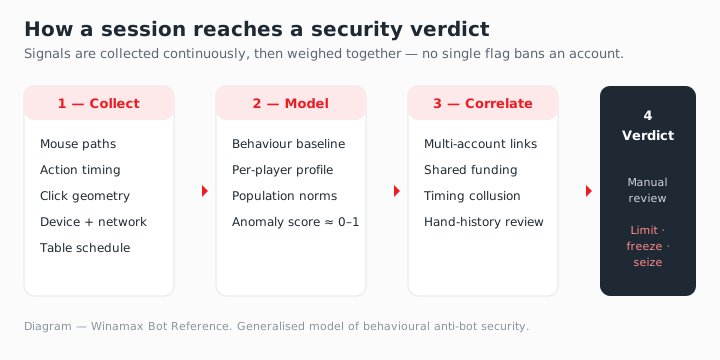
The four stages
Collect the signals
The client and server log far more than the cards: cursor trajectories and acceleration, the exact millisecond gap between a board change and your action, where inside a button you click, window focus, and how your table schedule looks over days. A bot is consistent in ways humans never are — and consistency is the signal.
Model the behaviour
Each account gets a behavioural baseline; sessions are scored against that baseline and against the wider population. The output is an anomaly score, not a yes/no. “Too steady,” “too fast across all spots,” or “identical timing regardless of decision difficulty” push the score up.
Correlate accounts
One suspicious account is a lead; a cluster is a case. Detection links accounts by shared device fingerprints, payment instruments, IP and timing patterns. A bot farm is far easier to catch as a network than any single account is in isolation.
Reach a verdict
High-score cases go to human review and hand-history analysis before enforcement, which is why action can feel delayed — the platform is building a case it can defend, not reacting to a single hand. The end states are limitation, freeze, or seizure plus permanent ban.
What does not save a bot
- Randomised delays. Add jitter and the distribution still looks unlike a human’s across thousands of hands.
- “Human-like” mouse curves. They help against the crudest checks and lose to population-level statistics.
- A fresh account. The account graph links it to the device and funding behind it.
- Low stakes. Volume across many tables is itself a flag, not camouflage.

A question about account security?
We document how bots and detection actually work. For a specific question on compliance or account safety, reach the team.